
Inclusive Prayer & Worship

At our school, prayer and liturgy are central to our Catholic identity. At the same time, we believe that prayer should be welcoming, accessible, and meaningful for every young person in our community.

As guidance in Planning and Celebrating Prayer and Liturgy with Young People (September 2024) reminds us:

“We must remove the barriers that many young people face, and our prayer and liturgy should be an inclusive example of best practice. In his ministry, Jesus would break down the social barriers towards inclusion and acceptance and that is what we are called to do in our ministry.”

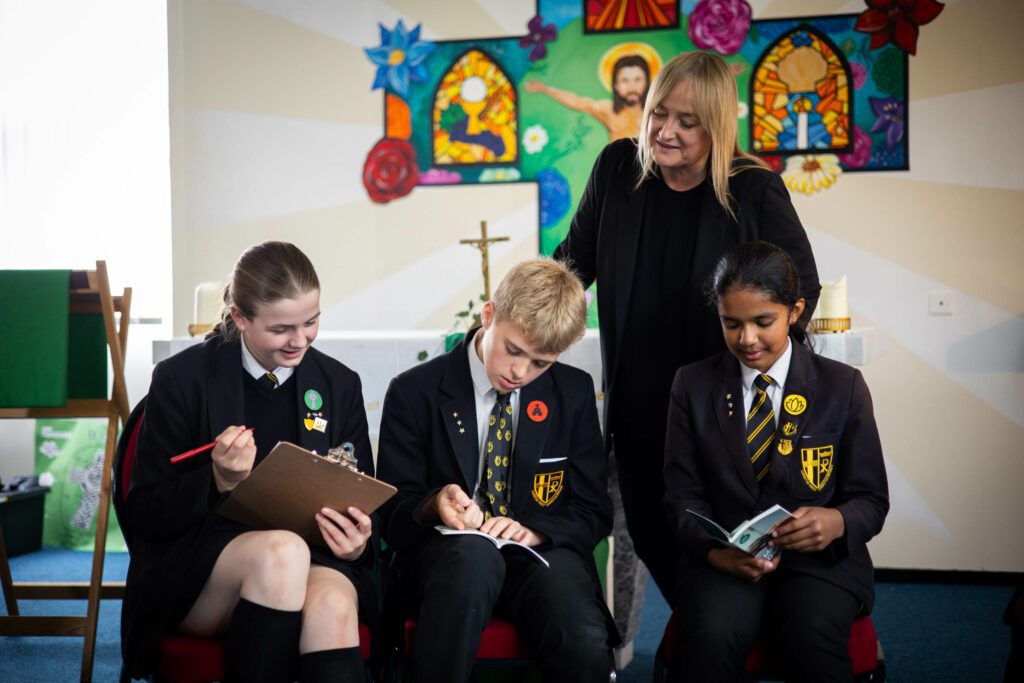
Following the example of Jesus, we aim to create opportunities for prayer and worship that allow all students to feel respected, supported, and able to take part in ways that are meaningful to them.

What Do We Mean by Inclusive Prayer and Worship?

Inclusive prayer and worship means adapting what we do so that prayer truly reaches the young people we serve.

In our school community this includes students who are:

  • practising Catholics
  • from other faith backgrounds
  • of no faith
  • students with SEND (Special Educational Needs and Disabilities)

Our aim is to ensure that every young person feels welcomed and respected during prayer and liturgy. While prayer reflects the Catholic tradition of the school, we also recognise the diversity of experiences and beliefs within our community and seek to make prayer meaningful and accessible for all.

Invitation, Accompaniment and Formation

Effective prayer and liturgy are rooted in three important principles: invitation, accompaniment, and formation.

Invitation

Prayer is always an invitation rather than an obligation. Each person’s dignity is respected, and students are invited to engage thoughtfully and freely. Just as Jesus invited His disciples to follow Him, we invite our students to encounter God through prayer and reflection.

Accompaniment

We recognise that every young person is on their own faith journey. Many of our students are Catholic, but each family’s experience of faith is different. We also warmly welcome students of other faiths or no faith. While we ask all members of our community to respect the Catholic nature of the school, we also value the beliefs and experiences that each student brings.

Formation

Those who lead prayer and liturgy are supported to do so with confidence and understanding. Staff and student leaders receive guidance and formation so that prayer and worship are meaningful, respectful, and well prepared.

Four Lenses for Prayer and Liturgy

To help create a clear and consistent approach to prayer in Catholic schools, diocesan guidance encourages us to reflect on prayer through four “lenses”. These lenses help ensure that prayer is thoughtful, inclusive, and meaningful for everyone.

Season

Prayer in our school follows the seasons of the Church year, such as Advent, Christmas, Lent, and Easter.

This rhythm helps students know what to expect and provides familiar themes, symbols, and language. Seasonal prayer helps young people connect their own experiences with the life of the Church and understand how faith is lived throughout the year.

Scripture

Scripture is at the heart of our prayer. Through the stories and teachings of the Bible, students encounter the message of the Gospel and are encouraged to reflect on their place in God’s story.

When we use Scripture in prayer, we choose passages that connect with the theme or Word of the Week. Readings are kept clear and accessible, but we also provide enough context so that students can understand the meaning of the passage, rather than hearing only a single isolated line.

Senses

Prayer becomes more meaningful when it engages the senses. This might include:

music or reflective sound, visual images or symbols, movement or gesture, meaningful objects, moments of silence

These elements can help students engage with prayer in different ways. At the same time, we are mindful of sensory and mobility needs, and we make adjustments where necessary so that every student can participate comfortably and fully.

Structure

A clear and familiar structure helps students join in prayer with confidence.

Using signposting, repetition, and well-known prayers allows everyone to follow what is happening. For example, students may use the school prayer or common prayers of the Church so that the words become familiar.

How prayer is led is also important. Leaders explain what will happen and invite students to take part, using phrases such as:

“In a moment we will…”

“After the Scripture reading we will…”

This clarity helps all students feel comfortable and included, and it is especially supportive for students with SEND or those who may be new to prayer.

A Community of Prayer

Our aim is to ensure that prayer and worship in school are welcoming, thoughtful, and inclusive, reflecting the Gospel values at the heart of Catholic education.

By removing barriers, respecting each person’s dignity, and inviting all students into moments of reflection and faith, we hope to nurture a school community where every young person feels able to engage with prayer in a meaningful way.